


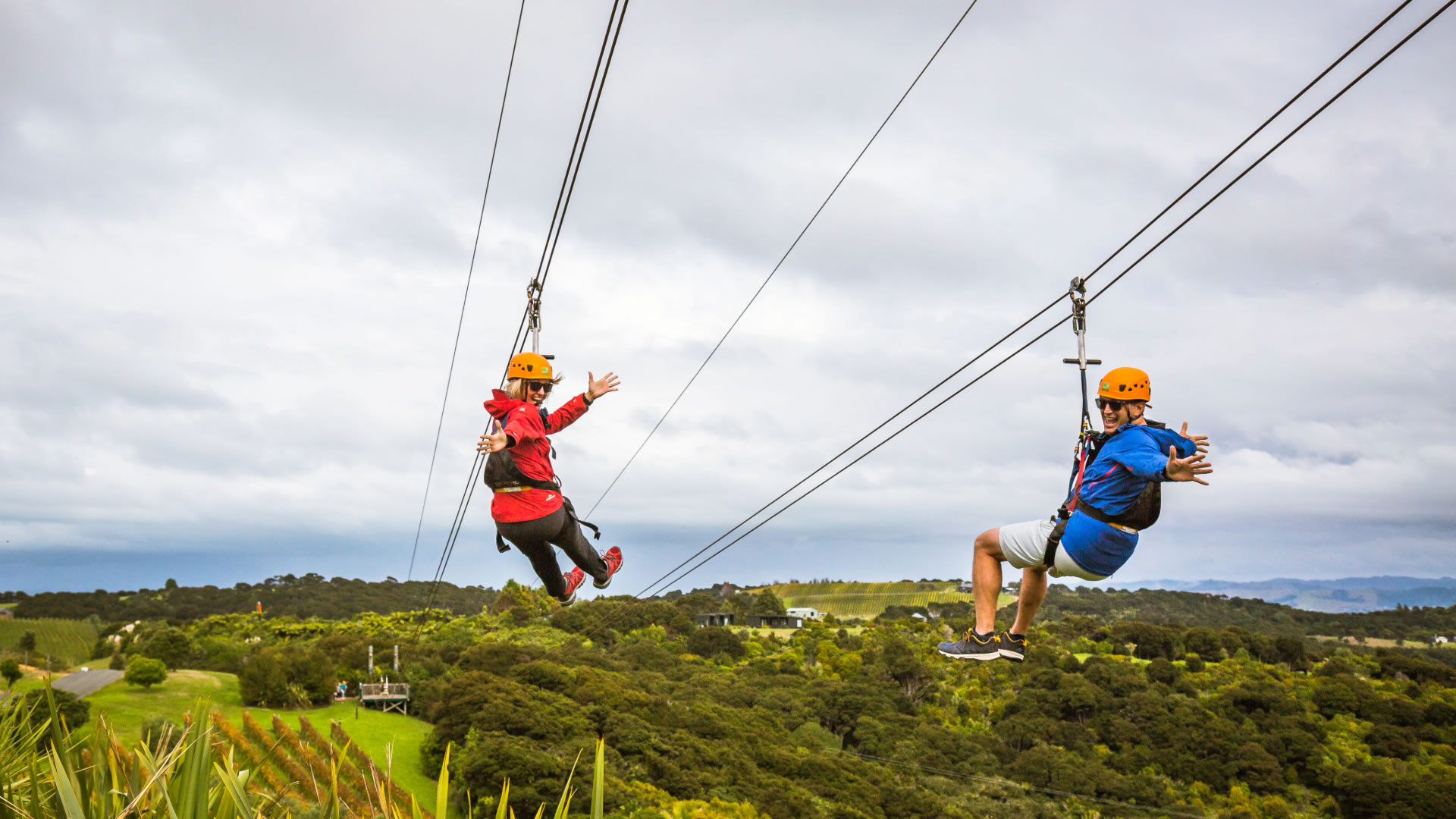
Experiences for families: Adrenaline moments that connect
0%

At a time when everyday family life is often fragmented between obligations, school, work, and screens, shared time is becoming one of the most valuable currencies. More and more families are therefore consciously choosing to invest in shared experiences instead of classic material goods – moments that cannot be wrapped in packaging, but that stay with you long after they are over.
Adrenaline experiences are no longer reserved only for individuals or “hardcore” thrill seekers. When chosen correctly, professionally guided, and safely executed, they can be an exceptional family experience that connects parents and children on a completely different level. Overcoming fear together, laughing, cheering each other on, and creating memories – this is the essence of modern family experiences.
Why experiences are the best investment in a family
Research and practice show the same thing: experiences bring more long-term satisfaction than objects. Children do not remember all the toys they ever received, but they clearly remember their first rafting trip, their first zipline descent, or the day they stepped out of their comfort zone together with their parents.
With adrenaline experiences, it goes one step further. It is not just about fun, but about:
- strengthening children’s self-confidence,
- developing trust in parents and guides,
- learning responsibility and respect for rules,
- building a positive relationship with movement and nature.
When a family experiences something extraordinary together, strong emotional anchors are created. These moments often become stories that are told for years to come.
Adrenaline + family? Yes, if you choose correctly
One of the most common concerns parents have is understandable: Are adrenaline experiences even suitable for children?
The answer is: yes – if they are chosen correctly.
Family adrenaline experiences are not extreme in the classic sense of the word. It is not about risk, but about controlled excitement adapted to the age, abilities, and experience of the participants. The key elements are:
- clear rules,
- professionally trained instructors,
- certified equipment,
- gradual progression of challenges.
That is why it is important for families not to decide impulsively, but thoughtfully – with safety, comfort, and the well-being of all members in mind.
How to choose the right experience for your family
Choosing the right experience is the foundation of a successful adventure. Not every experience is suitable for every family, and that is perfectly fine. It is important to consider the following factors:
- Children’s age
Some activities are suitable for younger children, while others require more physical strength, concentration, or psychological maturity. Good practice is to choose an experience where no one feels pushed beyond their limits.
- Physical fitness
Family experiences should be accessible. The goal is not exhaustion, but enjoyment. Many activities allow adjustments to pace, duration, or intensity.
- Group experience
The most beautiful family experiences are those where everyone participates – not necessarily in the same way, but with the same goal. A shared beginning, shared briefing, and shared conclusion create a sense of connection.
- Environment
Nature plays an exceptional role in family experiences. Mountains, rivers, forests, and open spaces are not just a backdrop, but an active part of the experience that takes children (and adults) away from everyday rhythms.
The most popular family experiences in Slovenia
With its diverse landscape, Slovenia offers an exceptionally wide range of activities that are also suitable for families. From gentle introductions to the world of adrenaline to more dynamic challenges for older children and teenagers.
Family experiences for younger children
With younger children, it is essential that the experience is playful, safe, and positive. The goal is to create a first contact with adventure, without pressure or fear.
These include:
- adventure parks with low elements,
- shorter and lower zipline rides at lower speeds, suitable for first family experiences,
- guided outdoor activities, where the focus is on exploration and movement.
Such experiences are often the first step that awakens curiosity and courage in children.
Family experiences for school-age children and teenagers
Older children and teenagers want more action. For them, experiences that already include a sense of speed, height, or water are ideal, while still remaining within safe limits.
Examples:
- archery, where focus, patience, and healthy competitiveness intertwine,
- climbing on artificial or natural walls, adapted to age and experience,
- wind tunnel flying, which offers an intense yet controlled sensation of free fall,
- rafting on calmer sections of rivers.
These experiences often act as a bridge between generations, as parents and children experience the same activity on an equal level.
Shared challenges create strong bonds
One of the greatest advantages of family adrenaline experiences is the dynamic that is established among participants. Parents are no longer just observers, and children are no longer just followers. Everyone is part of the same story.
When a child sees a parent overcoming their own fear, and when a parent sees a child showing courage, a new level of mutual respect is created. These are moments that cannot be recreated in everyday environments.
Safety as the foundation of every family experience
In family experiences, safety is never a compromise. On the contrary – it is the foundation on which the entire experience rests. Professionally guided activities include:
- detailed introductory briefings,
- tested and certified equipment,
- constant supervision by our instructors,
- adjustments based on conditions and participants.
When parents are relaxed, children are relaxed too. And relaxation is the condition that allows an adrenaline experience to become a positive experience rather than stress.
Family experiences where everyone participates
The greatest value lies in experiences where the family does not act as a collection of individuals, but as a team. It is not necessarily about everyone doing exactly the same thing, but about everyone being included in a shared flow, shared preparation, and shared conclusion.
Such experiences create a sense of belonging and cooperation. Children are not merely companions, but active participants, and parents are not just supervisors, but co-creators of the experience. This is precisely what distinguishes family adrenaline experiences from classic trips or visits to amusement parks.
Examples of experiences that encourage this dynamic include guided outdoor activities where each member has their own role, or adrenaline experiences where family members encourage and cheer each other on. A shared challenge, whether it is a zipline descent, entering a riverbed, or overcoming height, creates a powerful bonding experience.
Adrenaline as a positive teacher
Adrenaline often has a negative connotation, but in a controlled environment it functions as a powerful learning mechanism. Children learn:
- to manage fear,
- to listen to instructions,
- to trust themselves and others,
- to accept responsibility.
When a child steps into a new situation that is slightly outside their comfort zone and successfully overcomes it, an important internal shift occurs. The self-confidence gained through such an experience often carries over into other areas of life – school, social relationships, and sports.
For parents, this is an opportunity to support children in a healthy way: not through pressure, but through example, patience, and encouragement. A shared adrenaline experience thus becomes a platform for personal growth for the entire family.
Family experiences in different seasons
One of the advantages of adrenaline experiences is their diversity throughout the year. Families are not limited only to the summer season, but can choose activities according to the season, weather conditions, and mood.
Spring and summer
The warm months are ideal for outdoor activities connected with water, height, and nature. Families often choose experiences that allow movement, refreshment, and exploration of the surroundings.
Autumn
Autumn brings a slightly calmer pace, but no fewer experiences. Nature turns into warm tones, temperatures are pleasant, and activities are often more relaxed, yet still rich in content.
Winter
The winter season also offers special experiences that have their own charm. Families looking for something different can discover entirely new dimensions of adrenaline during this time – calmer, yet no less unforgettable.
This seasonal diversity allows family experiences to become a constant, not just a one-time event.
An experience as a family gift
More and more families are choosing to give an experience instead of an object on special occasions – birthdays, anniversaries, the end of the school year, or important milestones. The reasons for this are simple and very practical.
An experience:
- does not take up space,
- does not become obsolete,
- can be adapted to the recipient’s wishes,
- creates memories, not clutter.
A family experience as a gift has added value because it rewards everyone at once. Instead of each person receiving something individually, the family receives shared time. This is especially valuable during periods when coordinating schedules is challenging.
Such gifts often become the reason for a shared trip, a weekend getaway, or a mini adventure that the family eagerly anticipates and prepares for together.
Preparing for the first family adrenaline experience
To ensure the experience is truly positive, it is recommended that the family prepares appropriately. Preparation is not complicated, but it has a significant impact on the final impression.
Open communication
It is important to talk about the experience in advance. Children should know what awaits them, without embellishment or dramatization. Honesty builds trust.
Realistic expectations
Not everyone has to be equally enthusiastic. Some will be eager, others more reserved. Both are completely normal. The key is that no one is forced, but encouraged.
Comfortable equipment
Appropriate clothing and footwear significantly affect comfort. When the body is relaxed, the mind can more easily surrender to the experience.
Acceptance of imperfection
Sometimes things do not go exactly as planned – the weather changes, someone decides differently at the last moment. This is not a failure, but part of the experience. Flexibility is part of family dynamics.
When experiences become a family tradition
Many families who embark on this path once find that adrenaline experiences become part of their identity. It is no longer a question of “if”, but “what comes next”.
Children begin to suggest new challenges, and parents realize that such moments are an excellent opportunity to escape routine. Family adventures become a tradition that evolves and adapts, but always retains the same essence: shared time and shared experience.
Why family experiences are the future of quality leisure time
The world is changing rapidly, the pace of life is accelerating, and digital stimuli are omnipresent. That is precisely why real experiences are becoming increasingly valuable. Family adrenaline experiences are not just a form of entertainment, but a response to modern challenges – from a lack of movement to a lack of genuine connection.
When a family steps into nature together, feels excitement together, and overcomes a challenge together, something is created that cannot be replaced by any application or object. A story is created that lasts.
Choose an experience that connects
Family experiences are not a question of courage, but of decision. A decision to take time for each other. To choose experience over things. To step out of routine and create memories that will remain.
Adrenaline and family-friendly experiences prove that adventure and safety are not opposites. They are allies when they are in the right balance. And this balance is exactly what modern families are increasingly seeking.


Recent Posts


